How to Stack Coupons on Amazon (Complete 2026 Savings Blueprint)
How to Stack Coupons on Amazon (Complete Savings Blueprint)
Most shoppers use a single discount at a time. Smart shoppers combine multiple layers of savings for maximum benefit.
This guide shows you step-by-step how to stack coupons, on-page discounts, promotional credits, cashback, Subscribe & Save, and credit card rewards on Amazon. Additionally, it explains how to validate deals using HighDeals.net, avoid mistakes, and structure a long-term savings workflow.
By the end, you’ll have a complete, repeatable system that can save hundreds — or even thousands — per year.
Section 1: Understanding Amazon Discount Layers
Before stacking anything, you must understand the hierarchy of Amazon discounts.
1.1 Base Price vs. Sale Price
The base price is what Amazon lists as the regular price.
A sale price is a temporary reduction determined by:
- Dynamic pricing algorithms
- Seasonal promotions
- Competitor activity
Important: Only stack on a verified sale, not just the listed “discounted” price.
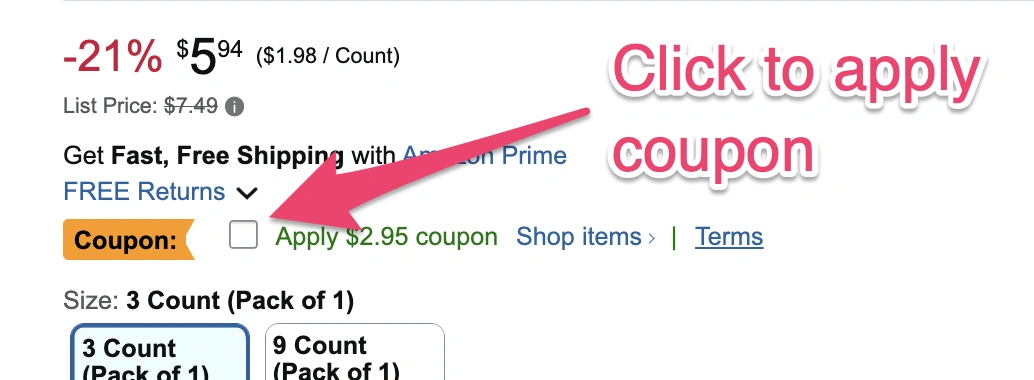
1.2 On-Page Coupons
Many products include clickable coupons:
- “Save 10% with coupon”
- “Apply $15 coupon”
Steps:
- Check for the checkbox under the product price
- Click it
- Add product to cart
- Confirm discount appears in cart
1.3 Subscribe & Save
Eligible products can be purchased with Subscribe & Save, giving 5–15% off depending on quantity and category.
Stacking Tips:
- Select Subscribe & Save option
- Combine with on-page coupon
- Confirm final discount in cart
You can cancel the subscription after the first shipment if desired.
1.4 Promotional Credits
Amazon occasionally offers credits such as:
- $5 for slower shipping
- $10 digital rewards from past purchases
- Seasonal gift credits
These stack automatically, reducing your total checkout cost.
1.5 Cashback
Cashback can come from:
- Browser extensions (Rakuten, Honey)
- Cashback portals
- Credit card rewards
Cashback is applied after discounts, further increasing effective savings.
1.6 Gift Cards
Using pre-purchased gift cards:
- Preserves real cash flow
- Can be purchased at discounted prices
- Stacks with all other discounts
Advanced Strategy: Buy discounted gift cards during promotions and use them to pay for stacked purchases.
Section 2: Validating Real Deals Before Stacking
Stacking on an unverified deal wastes effort.
2.1 Use Price History
Tools like CamelCamelCamel, Keepa, and HighDeals.net show:
- Historical prices
- 30-day, 90-day, 1-year trends
- Lowest-ever recorded price
Always check that the product is near a historical low before stacking.
2.2 Validate With HighDeals.net
HighDeals.net offers curated deals verified for authenticity.
Steps:
- Go to HighDeals.net
- Select your product category
- Look for listings with high discount percentages
- Cross-check with historical price data
2.3 Avoid Fake Discounts
Red flags:
- Inflated list prices
- Price spikes before a sale
- Minimal difference from historical average
Check HighDeals.net to confirm that the discount is real.
Section 3: Step-by-Step Coupon Stacking Workflow
Step 1: Add to Wishlist
Organize products by:
- Tech
- Home & Kitchen
- Lifestyle
- Priority purchase
Step 2: Apply On-Page Coupons
Check for checkboxes under product prices.
- Click coupon
- Confirm discount in cart
- Add to wishlist or cart
Step 3: Enable Subscribe & Save
If eligible:
- Select Subscribe & Save
- Confirm combined discount
- Note subscription for cancellation if necessary
Step 4: Use Promotional Credits
Check:
- “Your available promotions” at checkout
- Apply credits automatically
Step 5: Add Cashback
Use:
- Browser extension
- Cashback portal
- Credit card reward
Step 6: Pay with Gift Cards
If you have discounted gift cards:
- Apply during checkout
- Combine with all previous discounts
Section 4: Advanced Stacking Strategies
4.1 Seasonal Event Stacking
Best opportunities:
- Prime Day
- Black Friday
- Cyber Monday
Combine:
- Sale price
- Extra coupon
- Promotional credits
- Cashback
- Gift cards
4.2 Slower Shipping Credits
Amazon sometimes rewards slower shipping with digital credits, which stack with other discounts.
4.3 Category-Specific Deals
Amazon occasionally offers:
- Spend $50, get $10
- Buy 3 items, save 20%
These can be stacked with on-page coupons.
Section 5: Real-World Case Studies of Stacking Coupons
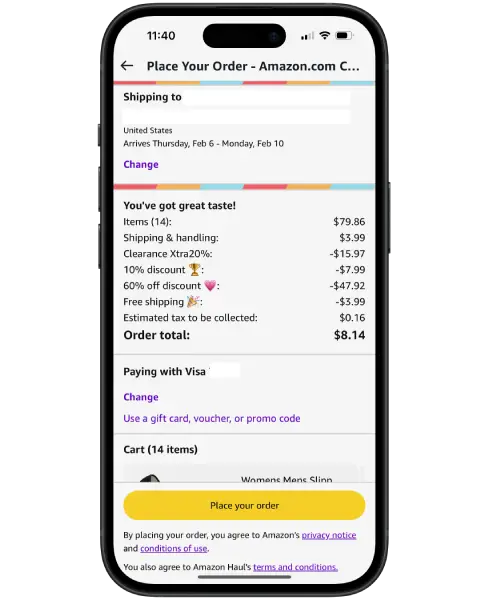
Seeing stacking in action helps understand the potential savings. Here are multiple examples:
5.1 Household Essentials Example
Scenario:
- Product: Paper Towels (12-pack)
- Base Price: $35
- Sale Price: $28 (verified via HighDeals.net)
- On-Page Coupon: 5% off → $26.60
- Subscribe & Save 10% → $23.94
- Cashback 5% → $22.74
- Promotional Credit: $1
- Effective Price: $21.74
Total Savings: 38% off the original price.
5.2 Electronics Example
Scenario:
- Product: Bluetooth Headphones
- Base Price: $120
- Sale Price: $99
- On-Page Coupon: $10 off → $89
- Gift Card Payment: $5 → $84
- Cashback 5% → $79.80
Total Savings: 33% effective discount
Key Takeaway: High-value electronics often have fewer stacking layers, so check multiple products in your category to find the most stackable deal.
5.3 Fashion & Apparel Example
Scenario:
- Product: Winter Jacket
- Base Price: $200
- Sale Price: $150
- On-Page Coupon: 10% off → $135
- Cashback: 5% → $128.25
Tip: Clothing rarely allows Subscribe & Save, but seasonal coupons and cashback can still produce strong savings.
Section 6: Mistakes to Avoid When Stacking
Even experienced shoppers can fall into pitfalls. Avoid these:
6.1 Ignoring Historical Prices
- Mistake: Stacking discounts without verifying price history
- Result: Buying at average price and thinking it’s a deal
Solution: Always cross-check historical price using HighDeals.net or tools like Keepa or CamelCamelCamel.
6.2 Forgetting Coupon Checkboxes
- Mistake: Adding product to cart without checking coupon
- Result: No discount applied at checkout
Tip: Always verify cart shows the correct discounted total.
6.3 Overbuying Unnecessary Items
- Mistake: Stacking on items you don’t need just because discounts are available
- Result: Overspending
Tip: Only stack coupons on items you actually plan to use.
6.4 Ignoring Subscription Rules
- Mistake: Forgetting to cancel Subscribe & Save if not needed
- Result: Unwanted recurring charges
Solution: Set calendar reminders to cancel if it’s a one-time purchase.
6.5 Confusing Fake Discounts
- Mistake: Believing a fake discount is real
- Result: Minimal savings
Solution: Verify discount authenticity via historical data and HighDeals.net.
Section 7: Psychology of Smart Stacking
Stacking is not just math — it involves behavioral awareness.
7.1 Scarcity Bias
- Amazon often displays “Only 2 left in stock!”
- Tip: Check HighDeals.net to see if the scarcity is real or algorithm-driven
7.2 Anchor Pricing
- Displaying “was $199, now $149” can trick buyers
- Tip: Always compare to historical averages to determine real savings
7.3 Countdown Timers
- Limited-time messages can rush decisions
- Tip: Confirm price history and availability before panic-buying
7.4 Avoid Impulse Purchases
- Rule: If you wouldn’t buy it at the regular price, don’t buy it just because it can be stacked
Psychological Strategy: Create a “stacking wishlist” instead of immediately purchasing all stackable items.
Section 8: Complete Smart Stacking Workflow
Here’s a repeatable, long-term system for maximizing savings on Amazon:
8.1 Step-by-Step Workflow
- Identify Product Need
- Focus on items you genuinely use
- Verify Discount
- Check HighDeals.net for real-time validated discounts
- Confirm historical price data
- Apply On-Page Coupon
- Check for clickable coupons
- Enable Subscribe & Save (if eligible)
- Add Promotional Credits
- Automatic at checkout
- Activate Cashback
- Browser extensions or portals
- Pay with Gift Card or Rewards Card
- Confirm Final Price in Cart
- Record Savings
- Keep a spreadsheet for tracking long-term savings
8.2 Example Workflow Calculation
Scenario: Household Cleaning Kit
| Layer | Price |
|---|---|
| Sale Price | $50 |
| Coupon (10% off) | $45 |
| Subscribe & Save (5%) | $42.75 |
| Cashback (5%) | $40.61 |
| Promotional Credit | $1 |
| Final Effective Price | $39.61 |
Total Savings: 21% off sale price, 20% off original base price.
8.3 Workflow Checklist
- ✅ Verified real discount via HighDeals.net
- ✅ Confirmed historical low
- ✅ Applied on-page coupon
- ✅ Enabled Subscribe & Save
- ✅ Added promotional credits
- ✅ Activated cashback
- ✅ Paid with gift card/reward card
- ✅ Checked final cart total
- ✅ Set subscription cancellation reminder
8.4 Long-Term Stacking Strategy
- Maintain a wishlist of frequently used products
- Monitor seasonal sales events
- Combine stacking with HighDeals.net verified deals
- Track total savings for motivation and reporting
Posts in this series
- Best Smart Home Gadgets Under $100 in 2025
- Apple AirPods 4 vs. Sony WF-1000XM6: Which Are Worth It?
- How to Stack Cashback and Coupons Like a Pro
- The Rise of AI-Powered Shopping Assistants in 2025
- How to Track Amazon Price Drops
- How to Stack Coupons on Amazon (Complete 2026 Savings Blueprint)
- 10 Amazon Shopping Hacks That Save Money
- How Amazon Pricing Algorithm Works
- How to Combine Gift Cards and Discounts on Amazon
- Beginner’s Guide to Shopping on Amazon